The Canon
Plate II
General Relativity
Light can circle a black hole.
Night ground, a deep blue-black, on Canson Baryta, 310 gsm

Its companion print
Demonstration II: How far the Sun bends starlight, worked out step by step. See it
On the wall

Why it endures
Newton described how gravity acts, but he couldn’t say what causes it. Einstein explained it as a curving of space and time, using the geometry of curved spaces that Bernhard Riemann had set out in 1854.
Through November 1915, with the mathematician David Hilbert closing in on the same equations, Einstein brought a new version to the Prussian Academy each week. On 18 November he showed that it explained why Mercury’s orbit turns slightly faster than Newton’s law allows, which had puzzled astronomers since 1859. A week later he presented the final equations.
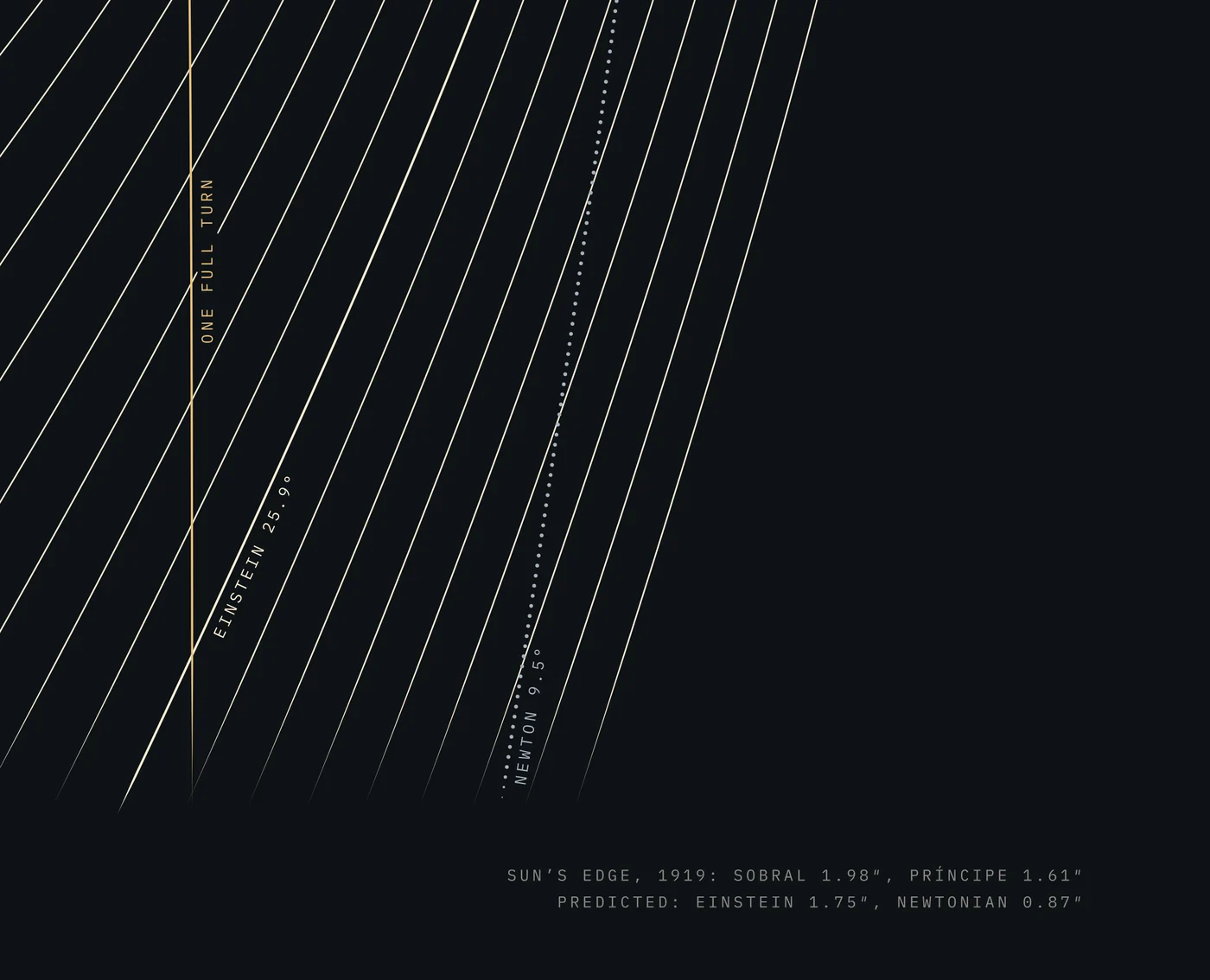
The theory also predicted that the Sun bends starlight twice as much as Newton’s law would. Two British expeditions tested the prediction during the total eclipse of 29 May 1919, from Sobral in Brazil and the island of Príncipe. Their measurements favoured Einstein, and the announcement in London that November made him famous around the world.
The same equations let space itself expand, which became the basis of the Big Bang theory, and they allow black holes. Einstein at first doubted both. Today the clocks on GPS satellites are set to run slightly slow before launch. In orbit they would otherwise gain about 38 millionths of a second a day, mostly because time passes faster farther from the Earth.
The theory breaks down at the centre of a black hole, where both gravity and quantum mechanics matter, and no theory yet combines the two.
Hang them together
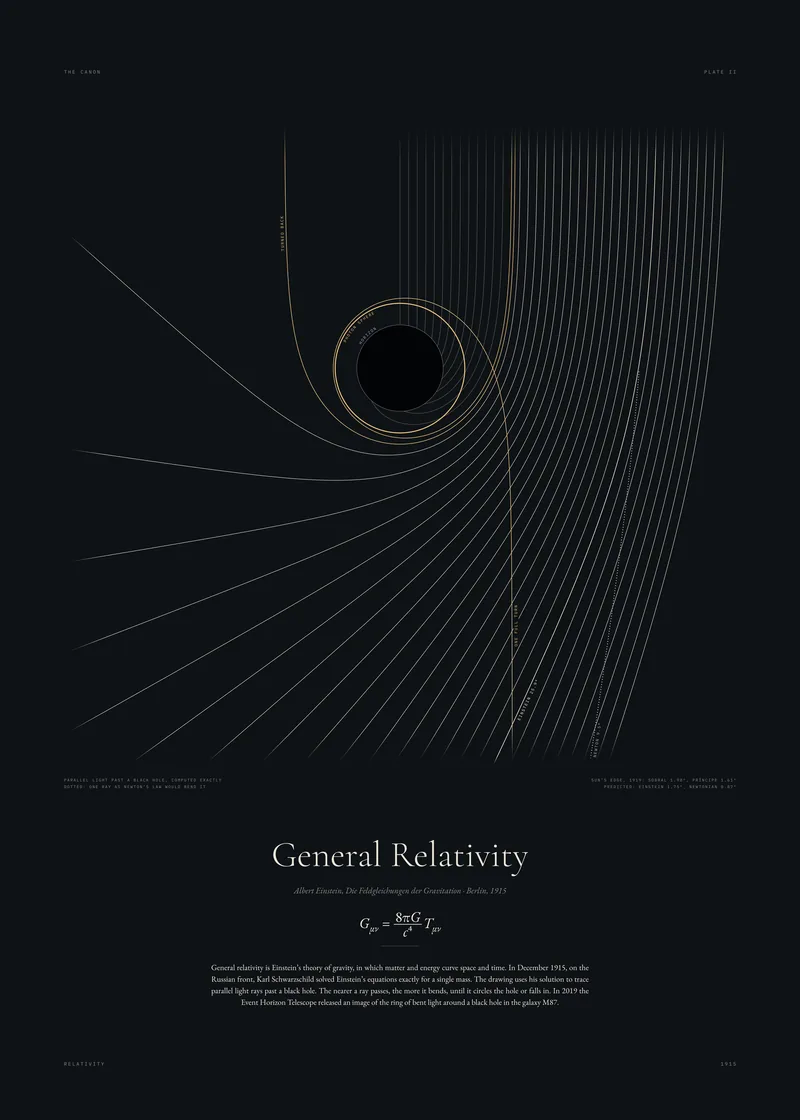
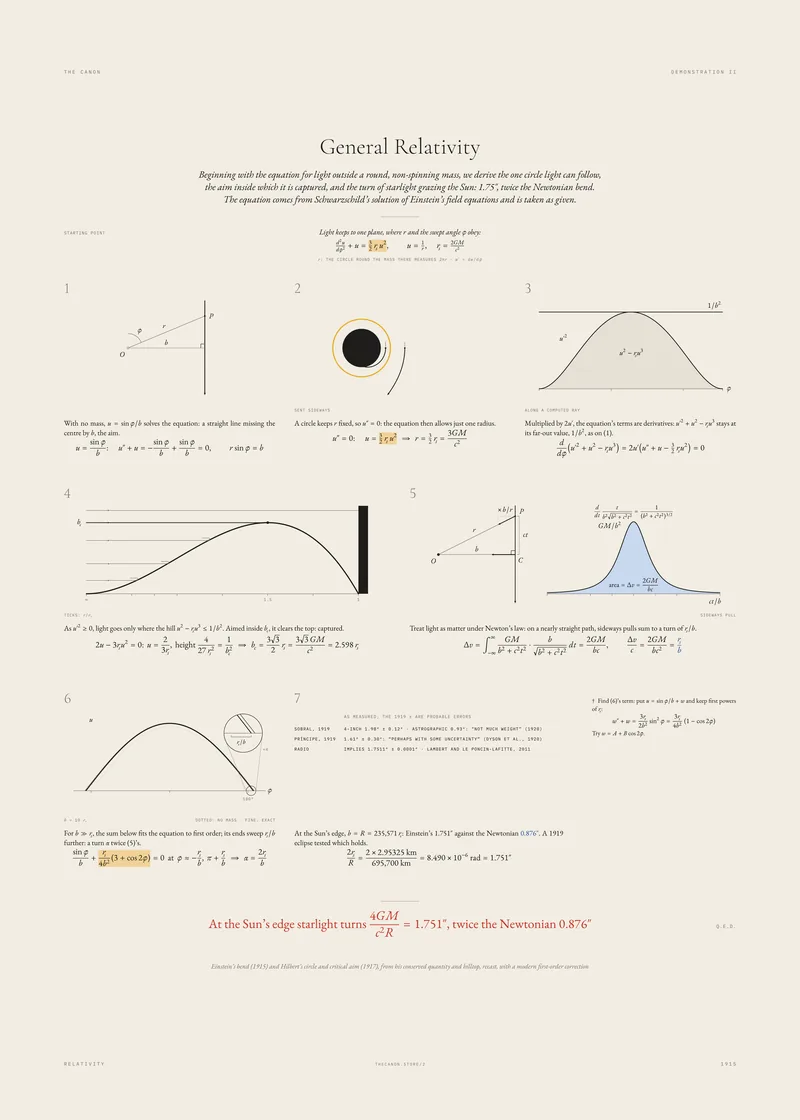
Plate II has a companion print, Demonstration II, which works out how far the Sun bends starlight. Hung side by side in the same size and frame, the two cost 10% less bought together.
Plate II and Demonstration II, Medium, 42 × 59 cm each, in black frames.
The plate
Albert Einstein, Die Feldgleichungen der Gravitation · Berlin, 1915
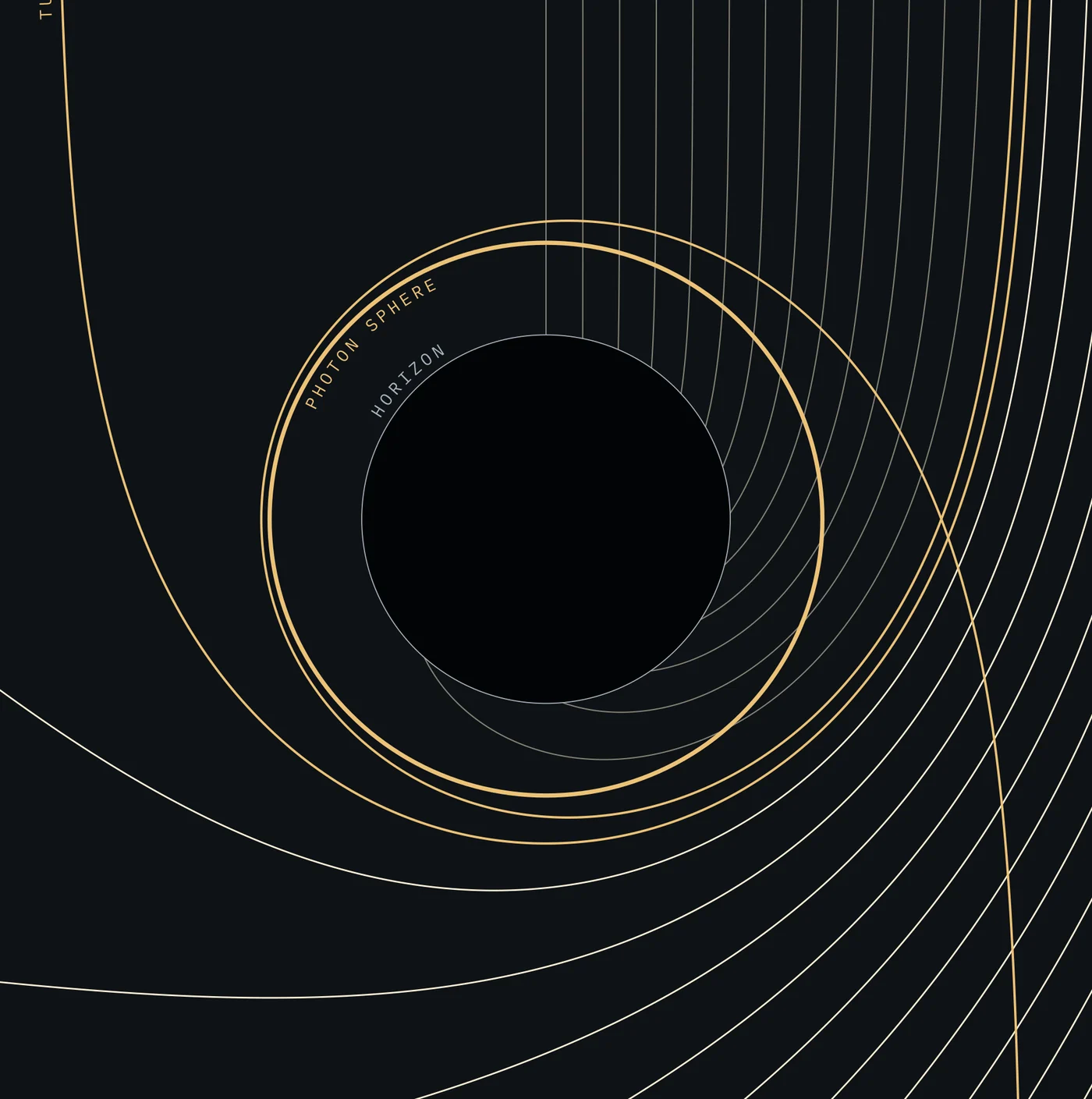
General relativity is Einstein’s theory of gravity, in which matter and energy curve space and time. In December 1915, on the Russian front, Karl Schwarzschild solved Einstein’s equations exactly for a single mass. The drawing uses his solution to trace parallel light rays past a black hole. The nearer a ray passes, the more it bends, until it circles the hole or falls in. In 2019 the Event Horizon Telescope released an image of the ring of bent light around a black hole in the galaxy M87.
Every mark on the plate comes from the mathematics or from measured data, and the type is set from the same files that go to the printer.
Sizes and prices
| Size | Unframed | Framed | |
|---|---|---|---|
| Small30 × 42 cm | £50$85 | £140$185 | 297 × 420 mm |
| Medium42 × 59 cm | £95$145 | £225$295 | 420 × 594 mm |
| Large59 × 84 cm | £160$215 | £390$515 | 594 × 841 mm |
| Extra large84 × 119 cm | £285$385 | Unframed only | 841 × 1189 mm |
- Paper: Canson Baryta, 310 gsm, printed as a giclée by theprintspace.
- Printed in: London for the UK, Brooklyn for the US. Small unframed prints travel flat, larger ones rolled in a tube.
- Framed small: A3 frame, glazed with glass.
- Framed medium: A2 frame, glazed with 3 mm acrylic.
- Framed large: A1 frame, glazed with 3 mm acrylic.
- Extra large: unframed only. A0 is a standard frame size.
- Frames: solid wood, finished in black, white or oak veneer, made in Germany. Each comes ready to hang.
- Edition: open, with a certificate. File version v2.